Novel Anti-PD1 Antibodies for Inhibiting T-cell Activity
Background
PD1 (Programmed Death 1) is an immune checkpoint protein that negatively regulates immune system activity through its interaction with PD ligands. In cancer, inhibition of the PD1/PD ligand interaction by anti-PD1 antibodies has been harnessed as an effective therapeutic strategy to boost immune attack against tumors. On the other hand, stimulating the PD1 pathway by therapeutic antibodies could potentially suppress deleterious immune activities in autoimmune diseases, and there is currently a shortage of such PD1 agonist antibodies.
Technology Overview
Researchers at Boston Children’s Hospital generated novel humanized anti-PD1 antibodies, using an in vivo mouse model of antibody diversification that harnesses the natural affinity maturation processes. Some of these new anti-PD1 antibodies can enhance, rather than inhibit, PD1 interaction with its ligand, PD-L1.
Further Details:
-
Tian, Ming, et al. “An in Vivo Method for Diversifying the Functions of Therapeutic Antibodies.” Proceedings of the National Academy of Sciences, vol. 118, no. 10, Mar. 2021, p. e2025596118, doi:10.1073/pnas.2025596118.
- Tucker, Christopher G et al. “The Role of Programmed Death-1 in Type 1 Diabetes.” Current diabetes reports vol. 21,6 20. 6 May. 2021, doi:10.1007/s11892-021-01384-6
- Francisco, Loise M., et al. “The PD-1 Pathway in Tolerance and Autoimmunity.” Immunological Reviews, vol. 236, no. 1, John Wiley & Sons, Ltd, July 2010, pp. 219–42.
- Canavan, Mary et al. “The PD-1:PD-L1 axis in Inflammatory Arthritis.” BMC rheumatology vol. 5,1 1. 11 Jan. 2021.
Stage of Development
Proof of concept:
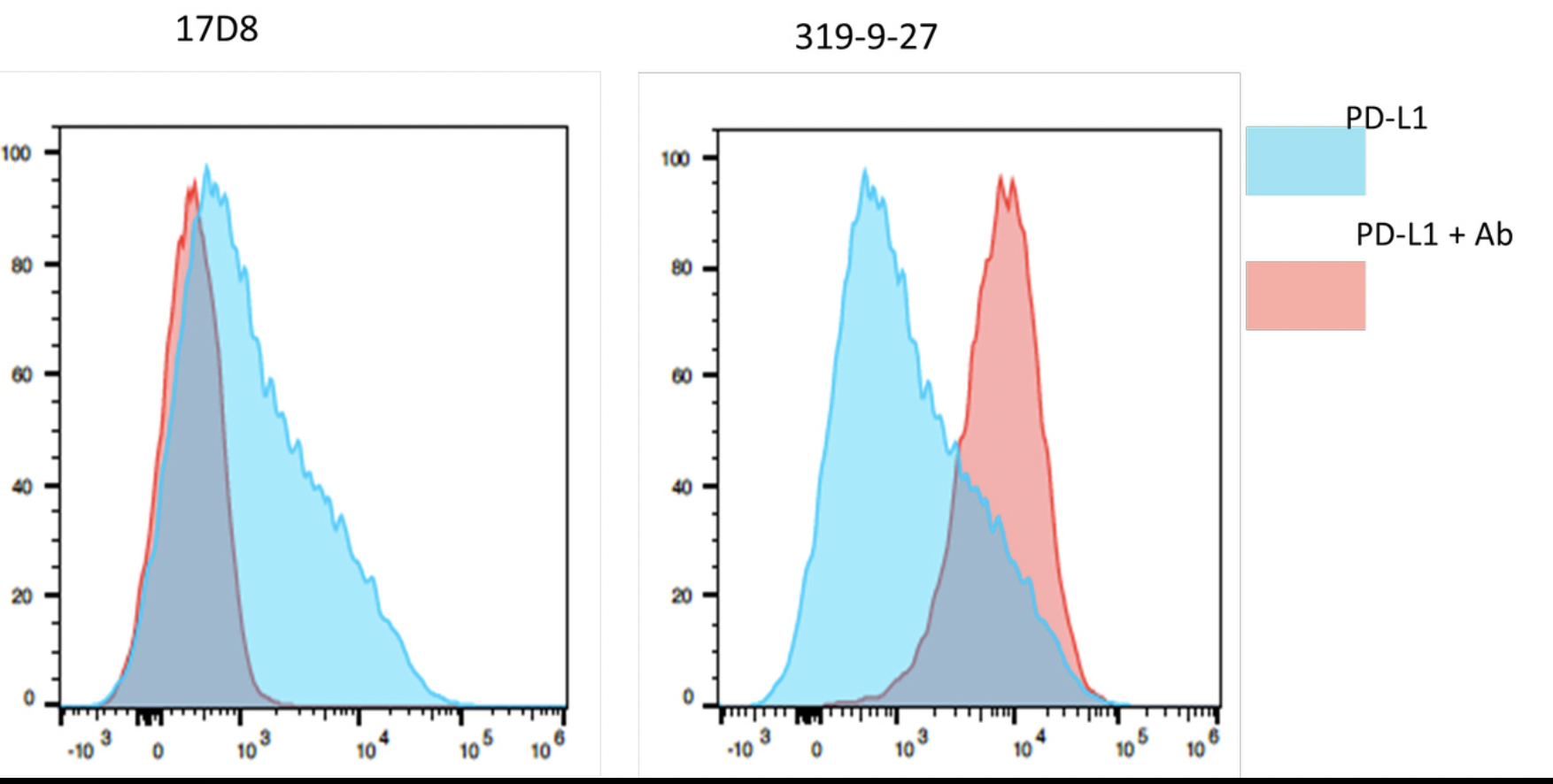 Benefits
These novel anti-PD1 antibodies were isolated from mouse models, where antibodies with poly-reactivities and unstable conformations are eliminated by quality control systems in vivo. Such antibodies may be more amenable to clinical application.
Applications
The effects of these PD1/PD-L1 enhancing antibodies on T cell activities remain to be validated in animal models. If these antibodies can indeed suppress T cell activity in vivo, they could potentially be developed into therapeutics for autoimmune diseases, in which destructive T cell activities play a major role, such as in type 1 diabetes and rheumatoid arthritis.